The 1,000-Year Wealth Cycle: Navigating the Changing World Order
Have you ever read the morning news and felt totally lost? Right now, we face massive economic changes. Furthermore, global supply chains are breaking. Meanwhile, political tensions are rising. As a result, it feels like the ground beneath us is constantly moving.
The world seems chaotic. Therefore, many people believe we are in completely unknown territory. However, what if we have been here before?
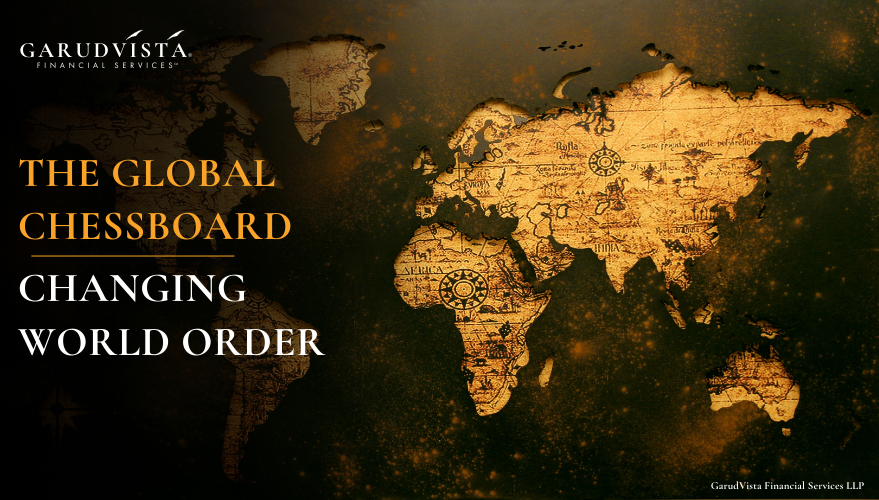
Let us step back from the daily news anxiety. Instead, let’s look at the last 1,000 years of human history. Suddenly, this chaos looks less like random noise. Indeed, it looks like a highly predictable pattern. The “World Order” is simply shifting. This order includes global rules, top currencies, and power structures. Furthermore, this shift is not new. In fact, it is the natural life cycle of empires.
In this post, we will look deeply at economic data. First, we will explore historical cycles. Next, we will see why superpowers rise and fall. Finally, we will explain what this huge change means for you. Specifically, we will cover how it affects your business, investments, and family over the next decade. 📉📈
1. A 1,000-Year Lookback: The Conveyor Belt of Empires 🏛️
History teaches us a humbling lesson. Global dominance is never permanent. Over the last 1,000 years, the world has seen many changing superpowers. Therefore, to understand our future, we must study our past.
Here is a look at major global empires. Consequently, you can see how they mirror today’s economy:
| Global Empire | Peak Era | Key Economic Innovations | The Fall (Late-Cycle Indicators) |
| The Dutch Empire | 1600s | First multinational corporation (VOC), first official stock exchange, advanced shipping design. | Rising labor costs, massive debt from wars, Bank of Amsterdam insolvency due to money printing. |
| The British Empire | 1870s | Steam engine, Industrial Revolution, unrivaled naval military force, London financial hub. | Overextended global footprint, bankrupting costs of WWI & WWII, fractured Pound dominance. |
| The United States | 1945 – Present | Microchip, internet, “arsenal of democracy,” US Dollar global reserve status (Bretton Woods). | Skyrocketing national debt (>$34 Trillion), intense political polarization, weaponization of currency. |
| The Multipolar World | Future | Artificial Intelligence, Quantum Computing, Space Economy, Green Energy. | Decentralization of power; the Global South challenging the institutional status quo. |
Key Takeaway: Overall, we are leaving a U.S.-dominated world. Instead, we are entering a multipolar reality. Specifically, China is growing fast economically. Meanwhile, India is seeing a population boom. Consequently, these factors signal a massive shift in global power.
For Investment Related Details : Click Here
2. The Anatomy of Change: Why Do World Orders Shift? ⚙️
World orders do not change overnight. For example, a single war or election does not cause it. Instead, they follow a highly predictable pattern. Experts often call this the “Big Cycle.”
Here is exactly how the cycle works, step-by-step:
- 📚 Education: First, the cycle begins here. A rising nation invests heavily in science and math.
- 💡 Innovation and Technology: Next, a smart workforce leads to new inventions.
- 🏭 Cost Competitiveness: Because the nation works efficiently, their goods become very cheap globally.
- 🚢 Share of World Trade: As a result, the nation captures huge global trade. Therefore, the world relies on their exports.
- 💰 Economic Output: Consequently, this trade domination leads to massive wealth and high GDP.
- ⚔️ Military Strength: To protect this wealth, the nation builds a strong, global military.
- 🏦 Financial Center Strength: Then, the nation’s capital becomes the world’s financial hub.
- 💵 Reserve Currency Status: Finally, the world adopts this nation’s currency for trade.
The Mechanics of the Fall
However, success brings problems. As a nation gets rich, people demand higher pay. Consequently, the country loses its cheap costs. Furthermore, they take on massive debt. They use this debt to buy too much and fight wars. As a result, central banks must print money. This action devalues their currency. Ultimately, this paves the way for a new, hungrier rival power.
3. The Timeline: The Transition Period ⏱️
If we look at past data, a global empire usually lasts 150 to 250 years. However, the most critical phase is the Transition Period. Specifically, this is a messy and volatile time. The old order falls, while the new one fights to take over. Historically, this overlap lasts 10 to 20 years.
For instance, suppose this transition began around the 2008 Financial Crisis. Therefore, we are living right in the middle of it now. Consequently, this perfectly explains our daily inflation and global tension.
4. The Striking Similarities: The 1930s Parallel 🌪️
Every major power shift has similar economic events. In fact, the 1930s mirror today with scary accuracy. Here are the key similarities:
- The Debt Trap: The 1930s saw zero-interest rates and money printing. Similarly, we saw this exact response after 2008 and 2020.
- The Wealth Gap: When money shrinks, people fight. Consequently, this causes extreme political anger and populism.
- Tariffs: In 1930, heavy taxes hurt global trade. Today, we see similar supply chain bans and tariffs.
- The Thucydides Trap: This happens when a rising power threatens a ruling one. Currently, China is directly challenging U.S. power.
For Investment Related Details : Click Here
5. The Aftermath: Implications of the Change 💥
What happens when the 20-year transition ends? The world does not end. However, the rules change completely.
- A Massive Wealth Transfer: Wealth rarely vanishes. Instead, it transfers. It moves from debtor nations to creditor nations. Furthermore, it shifts from paper money into hard assets.
- Debt Restructuring: The main goal of a transition is to clear old debt. Usually, massive inflation achieves this. As a result, debts are paid with cheaper money.
- New Global Institutions: Finally, the winner creates new trade rules and global currencies.
6. Who Benefits During the Transition? 🚀
Transitions are painful for those stuck in the past. However, they offer huge opportunities if you plan well. Here is who wins during this shift:
| Strategic Category | The Asset / Beneficiary | Why It Wins in the Transition |
| “The Hedgers” | Nations like India, UAE, Brazil | They refuse to pick a side. Thus, they secure foreign investment and trade with everyone. |
| Hard Assets | Gold, Critical Minerals, Real Estate | Capital flees paper fiat. These assets soar in value when central banks print money. |
| Next-Gen Tech | AI, Quantum Computing, Space | These industries will print new billionaires. Whoever controls microchips controls the future. |
7. Why Today is NO Different 🔄
It is tempting to say, “But today is different! We have AI and the internet.” However, this is a dangerous mistake. The tools have changed. Yet, human nature remains the exact same.
The cycles of greed, fear, and debt are identical to the 1600s. Therefore, the current shift is not strange. Instead, it is a textbook economic cycle.
8. Actionable Steps for Leaders 🧠
We cannot stop the changing world. However, we can prepare for it. Relying on old investment strategies will likely fail in the next decade. Thus, you must adapt:
- Geographic Diversification: First, build supply chains across multiple regions. Look to emerging markets for growth.
- Hard Assets & Real Value: Next, buy assets that governments cannot print. For example, focus on commodities and strong real estate.
- Technological Frontier: Finally, adopt AI in your business. Make sure your investments capture this new tech growth.
Conclusion: Turning History into Strategy
The best advantage you can have today is knowing the past. As Mark Twain famously noted, “History doesn’t repeat itself, but it often rhymes.” Indeed, the 2020s will shape the next century. There will be massive losers. Conversely, there will be huge winners. Ultimately, your success depends on your ability to adapt. Therefore, stay disciplined, diversify wisely, and let strategic asset allocation work for you!
Authored by:
Ayush Gupta
(Founder & Designated Partner)
GarudVista Financial Services LLP
This is New India, and intelligent investing is the future.
👉 For Professional Portfolio Review / Investment Related Details : Click Here
Disclaimer: GarudVista Financial Services LLP is an AMFI-registered Mutual Fund Distributor (ARN-345364). Mutual Fund investments are subject to market risks, read all scheme related documents carefully. The content provided in this blog is for informational and educational purposes only and does not constitute “Investment Advice” as defined under SEBI (Investment Advisers) Regulations, 2013, nor does it represent a formal recommendation or offer to buy/sell any securities. We operate solely as a distributor and receive commissions from Asset Management Companies (AMCs) for investments routed through us. Past performance is not indicative of future results; GarudVista makes no guarantee of returns or capital protection. Readers are advised to consult their independent financial or tax advisors before making any investment decisions.
Read AMFI disclaimer here